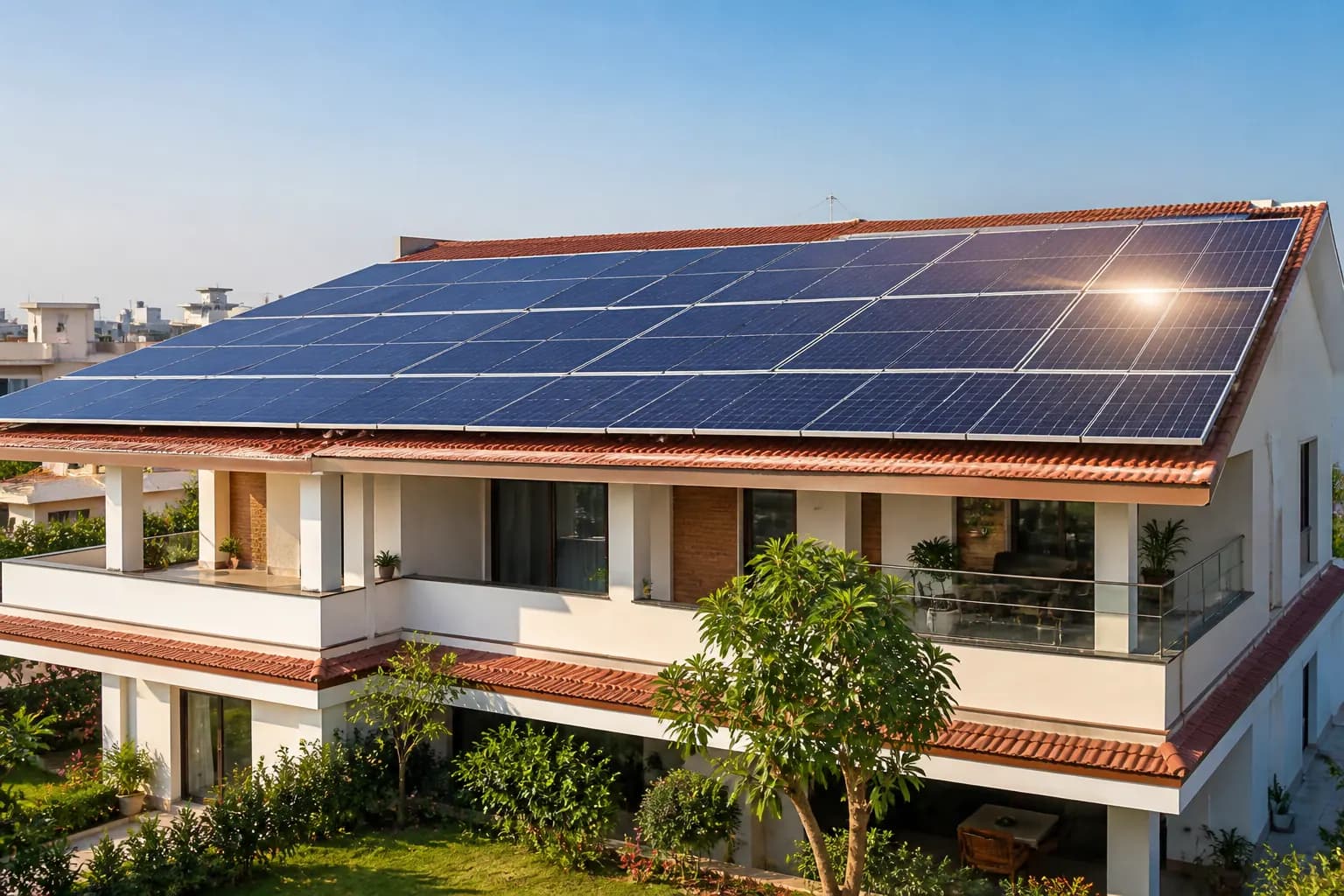
How much electricity can solar panels generate?
“How many units will my solar panels produce?” is one of the most important questions before you invest. Generation depends on system size (kW), location irradiance, roof orientation and tilt, shade, soiling, temperature, and system losses—not a single national average.
This guide explains how to think about solar generation for Jaipur and Rajasthan, where sunshine is a genuine advantage, and how to read EPC estimates without marketing fluff.
Generation is measured in kWh (units)
- kW = system capacity (size of the plant)
- kWh = energy produced over time (what appears as “units” on bills)
A 5 kW system does not produce 5 units every hour all year. Output rises and falls with the sun, weather, and system health.
Why Rajasthan is strong for solar yield
Rajasthan—including Jaipur—typically enjoys high solar irradiance compared with many Indian regions. That supports attractive annual yield when the array is well designed and kept reasonably clean. Dust seasons still matter; see our solar panel maintenance guide.
Strong sunshine does not excuse poor layout. A shaded 5 kW array can underperform a clean, well-oriented 3 kW system.
Rule-of-thumb ranges (directional only)
Installers often discuss annual generation as a band of kWh per kW per year, adjusted for local design. Treat any blog number—including ours—as directional:
- Use it to compare proposals, not to replace a site-specific estimate
- Ask what assumptions were used (tilt, azimuth, soiling loss, inverter efficiency)
- Prefer month-by-month estimates over a single annual headline
Try SolarOnn’s solar calculator for a planning estimate, then validate on survey.
What reduces real-world generation
1. Shade
Water tanks, parapets, trees, neighbouring buildings, and future construction can cut yield sharply—especially if shade hits mid-day.
2. Soiling (dust)
Rajasthan dust lowers output between cleanings. A maintenance plan protects the investment.
3. Temperature
Hot panels produce less than cool panels at the same irradiance. Module temperature coefficients and airflow under the array matter in Jaipur summers.
4. Orientation and tilt
South-facing layouts are common targets in India, but roof geometry often forces compromises. A good design maximises annual yield within your real roof constraints.
5. System losses
Wiring, inverter efficiency, mismatch, and downtime all eat into “nameplate” expectations. Transparent EPCs disclose assumed losses.
Relating generation to bill savings
Savings depend on how many generated units you self-consume versus export, and on your tariff / settlement rules. Generation alone is not savings.
- Estimate annual / monthly kWh
- Value self-consumed units at your marginal tariff
- Value exported units per applicable net metering / net billing rules
- Subtract realistic O&M
More detail: is solar worth installing in Rajasthan? and net metering explained.
How to evaluate an EPC generation claim
Ask for:
- Assumed specific yield (kWh/kW/year) and why it fits your roof
- Shade analysis notes
- Degradation and performance warranty context
- Monitoring plan so you can verify output after commissioning
If two quotes show wildly different generation for the same roof photo, dig into assumptions—not only price. Cost context: solar panel installation cost in Jaipur.
Practical next steps
- Gather recent electricity bills
- Run the calculator
- Book a free consultation for a Jaipur roof survey
- Compare proposals on ₹ per expected unit and scope clarity—not sticker kW alone
Actual solar generation depends on system design, rooftop conditions and other site-specific factors. If you are planning a system, explore our solar panel installation services in Jaipur to understand the installation process.
Homeowners planning a rooftop system can also explore residential solar installation in Jaipur for more information about our residential approach.
SolarOnn designs residential and commercial rooftops across Jaipur with monitoring-ready commissioning so generation claims can be checked in the real world.
FAQ
Article FAQs
Quick answers related to this solar guide.
Daily output varies by season, weather, and design. Use annual or monthly estimates from a site survey rather than a single fixed daily figure from a blog or brochure.
Still have questions?
Contact Our Solar ExpertsOr browse the complete FAQ hub for detailed answers by topic.
Related articles
Continue exploring SolarOnn’s solar energy blog for Jaipur.

Is Solar Worth Installing in Rajasthan?
A clear framework for whether rooftop solar is worth it in Rajasthan—yield, tariffs, subsidy caveats, and quality EPC realities.
1kW vs 3kW vs 5kW vs 10kW Solar Systems
Compare 1kW, 3kW, 5kW, and 10kW solar systems—who each size fits, roof notes, and how to choose based on bills—not neighbours.
Solar Panel Maintenance in Jaipur: System Checks & Ongoing Care
Dust, monitoring, and safe cleaning—a practical solar panel maintenance guide for Jaipur and Rajasthan rooftops.